“There are probably a lot of people like me in rowing clubs across the country”
Frankie Allen explains how she went from ‘rowing in circles’ to how a chance encounter started her on the road to becoming Paralympic Champion
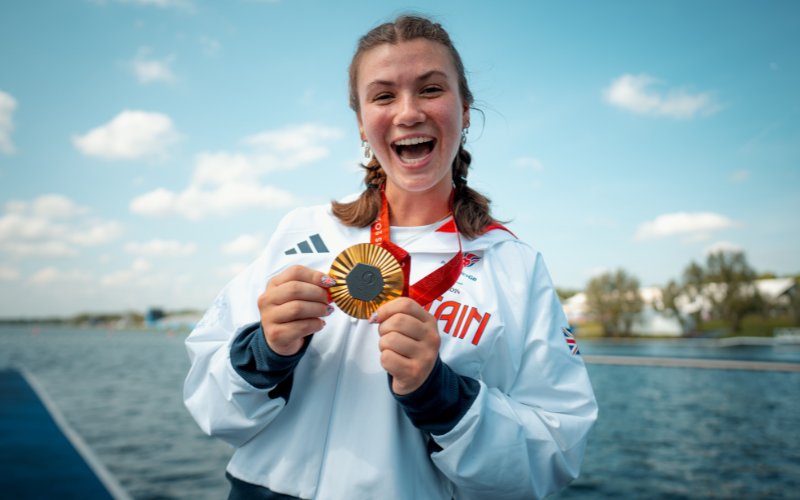
Born with Erb’s Palsy, Frankie never considered herself as disabled. “I knew that I’d had a tricky birth and they had to pull me out, which was why I had an issue with my arm, and growing up I needed to have a lot of physiotherapy. I don’t recall being told ‘you have a disability’, it was more just feeling a little different. The physio would give me lots of work and exercises to try to make it as easy to live with as possible and over time it just became the norm. I thought ‘that’s part of me’ and I got good at adapting my life to it, especially when doing sports when I was younger. I didn’t know Para Rowing existed and had never considered that I would later classify as a Para Rower, let alone become a Paralympic Champion.”
It wasn’t easy. Inspired by cousins and an uncle who all rowed and would take her to regattas in her youth, Frankie fell in love with the sport and was determined to become a rower. “My physio asked me ‘what do you want to do when you grow up?’ and I said, ‘I want to be a rower’. The physio immediately said that wouldn’t work with my Erb’s Palsy. But I think that fused my stubbornness and I became determined to prove the physio wrong!”
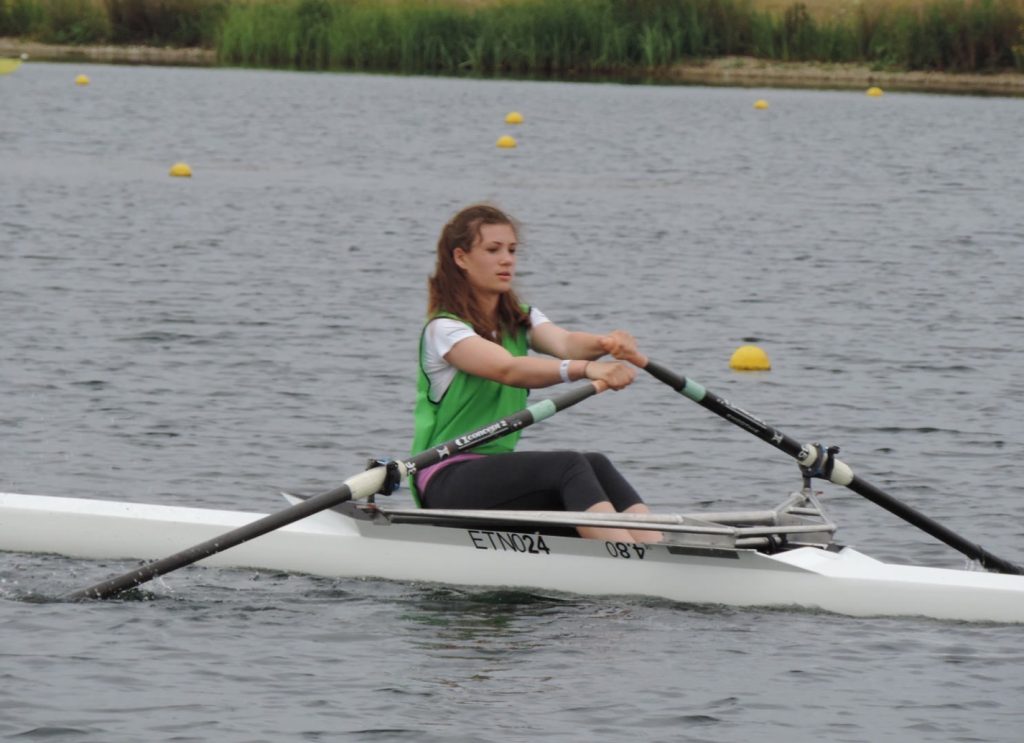
She was almost twelve years old when her uncle took her out in a boat for the first time. “I remember going out in the single a few times and it felt amazing. I was going around in circles at first and it became a running joke that I’d go into bushes and pull myself around, but it never registered in my head that my arm was impairing me. I just adapted and got on with it and the love of the sport grew from there.”
It wasn’t long after that that a chance encounter changed the course of her life. Frankie’s uncle was working as a dentist who coincidentally was running dental health checks for all the GBRT athletes about to head to the Rio 2016 Olympic and Paralympic Games, and Grace Clough walked in. When Grace told Frankie’s uncle about her own Erb’s Palsy diagnosis, the conversation quickly switched to Frankie and Grace suggested that she meet with the GB coaches and see about getting classified for the Para Rowing programme.
Frankie didn’t waste any time. “After my uncle told me about Grace I went in to see about getting classified pretty quickly. But I was still growing and they asked me to keep up my rowing and come back in a few years time. So I kept rowing at school and while studying at Oxford Brookes University. Grace was really helpful in giving me advice as well as some exercises that she’d been given by the team physio. She was the first person I’d ever met who was like me. Before meeting Grace I thought my arm was something that would restrict me but her success showed me that it was possible to achieve my dream.”
That was enough to keep Frankie focussed and so returned to the GB Rowing Team in October 2021. “I went back after the Tokyo Games and was classified as a PR3. I then went into the trials process and was training with the team from January 2022. It snowballed so quickly, before I knew it I was racing and winning medals at World Rowing Cups, the European and World Rowing Championships and the Paris 2024 Paralympic Games.”
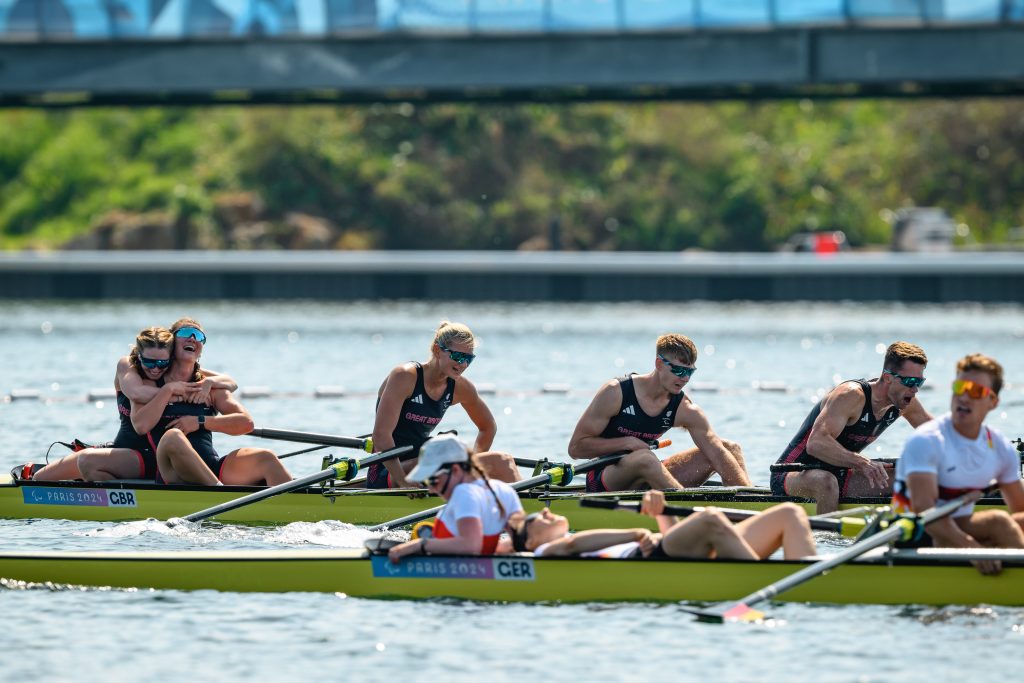
One of the things that surprised Frankie the most when joining the GB set up was how staff and athletes already understood her condition. “None of my friends growing up knew that I had Erb’s Palsy and it’s something that I didn’t speak about. So it was quite a shock when I started out at Caversham to hear people come up to me and say ‘you have Erb’s Palsy’. It makes me think that there are probably a lot of people like me in rowing clubs across the country who have grown up needing specialist physiotherapy attention who could follow in my footsteps and join the Para programme. It’s changed my life.”
As for her advice to anyone thinking about joining the Para programme: “If there’s anything that restricts you within rowing that has restricted you over time and you enjoy rowing and want to do it at a high level, there’s no harm in coming in, meeting with the coaches and support team and asking the questions. The worst they can do is say, sorry you don’t classify. The set up is also brilliant whatever level you’re at, from teaching people to row, to those who are further advanced. It accommodates all abilities and the coaches are more specialised to accommodate your disability too. So being on the programme can help you excel because you’re doing training that suits your body and is good for your body rather than doing generalised training at a club.”
For more information on the GB Para Rowing programme visit: https://www.britishrowing.org/para