Culture and capacity: Reflections from the British Rowing Club Leader Conference
Engaging youth leaders, clarifying roles and looking beyond the silverware were key emerging themes at Sunday’s Conference
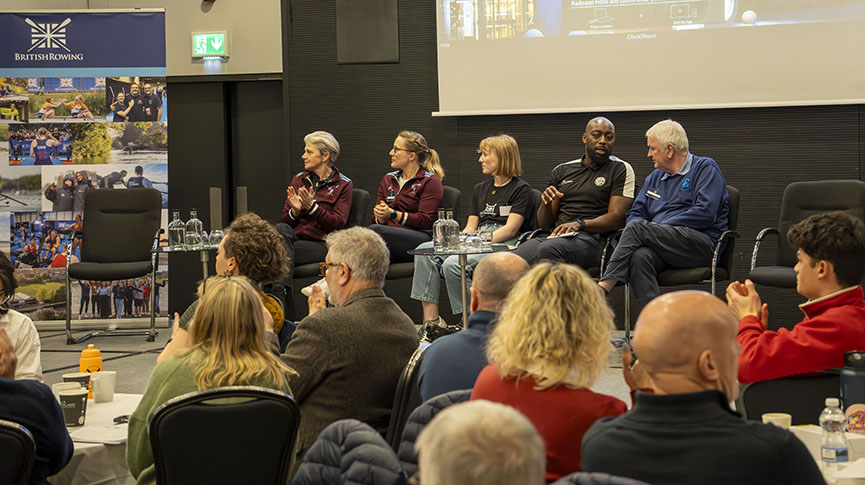
On Sunday, 1 February, over 300 club leaders gathered at the first ever British Rowing Club Leader Conference. With a programme full of learnings gleaned from other sports, reflections on progress made and looking towards a brighter future, here are five key reflections from the day.
Success is about impact, not just outputs
Dr Cath Bishop’s keynote speech was underpinned with important questions for clubs and their leaders to ask themselves. Who is in the pictures on your club walls? What stories do you tell again and again, and how does that shape your legacy?
The social value of the sport was given the spotlight this weekend, looking beyond medals, members and money. Club leaders were asked to imagine what they would notice if they were walking into their club for the first time, and what lasting impact those things might have on their members’ experience in the sport.
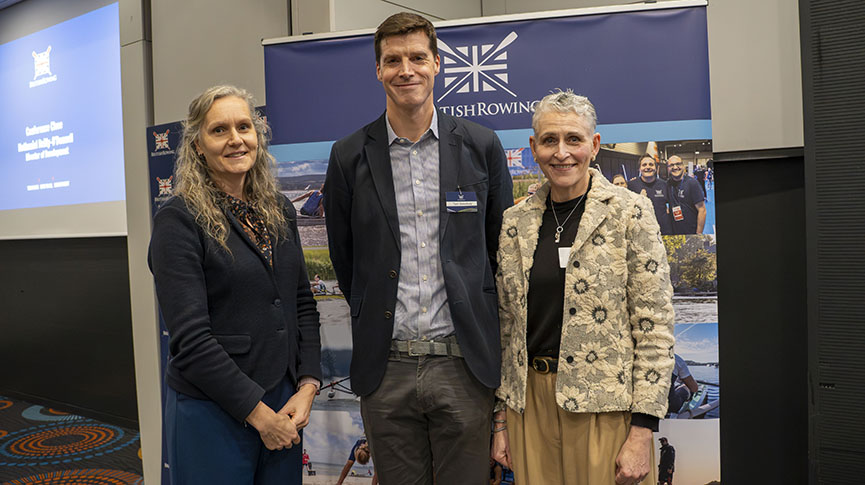
Incoming British Rowing CEO Tom Solesbury opened and closed the Conference with a message of thanks to those who give their time to the running of their clubs day in and day out, and a promise to work alongside them. “Together, we can harness the power of rowing to change lives.”
Culture is everything
Clubs are the gateway to inclusion in rowing, and everyday environment shapes whether people feel welcomed and valued. What clubs reward, tolerate and prioritise defines the experiences of the rowing community. This message was particularly impactful for Isabella Bryant, Social Secretary at Bath Spa University RC.
“I’ve found it really interesting to learn about how community and culture works and how we can integrate that more into our club. When we get back to the club we’re gonna have a meeting and we’re gonna work together on culture…really trying to get the feeling right.”
Volunteers are capacity, not extra help
True sustainability is built once hidden skills are unlocked. Derby Rowing Club’s Martha Nutkins raised the dangers of relying on one single point of failure – in this case Josh Rhodes-Hook, a dedicated volunteer at the club who took on the roles of boatman, handyman, parent liaison, club rowing safety advisor and rowing community leader, all at the same time. Whilst Josh still goes above and beyond for the club, Derby have restructured their club roles to allow Josh to focus on his passion for coaching, and others to develop their knowledge and step up to positions of responsibility.
‘Unlocking capacity’, a session chaired by Miriam Luke MBE, made it clear that sustainable clubs unlock hidden skills through clear, time-bound roles and systems that reduce reliance on a few individuals.
Double Olympian and Junior Head Coach John Collins reflected on volunteers’ impact on and importance to our sport. “Today has really opened my eyes up to a whole other aspect of running clubs that I hadn’t thought of before. I’ve been involved in rowing in a reasonably professional capacity, but it’s eye opening to be reminded of how much volunteers really support rowing.”
Adopting a learning mindset is critical
Being curious about other clubs and leadership methods to expand your idea of what is possible.
“You never stop learning” – Session Chair, Miriam Luke MBE
The British Rowing Club Leader Conference hosted a number of young leaders from rowing clubs across the country, shedding light on their experiences taking on responsibility from a young age. Young Leader Rebecca Stokes from Windermere Rowing Club spoke about how Windermere has welcomed her into a role where she can influence positive change.
“I am the youngest person at my club here and it’s been quite an interesting experience to see how other clubs are doing things. Because I’m a young person leading a lot of older people, it can be quite a strange dynamic. But it’s been inspiring to see how many other clubs are trying to look at doing the same things. It’s not just us by ourselves looking at trying to get better.”
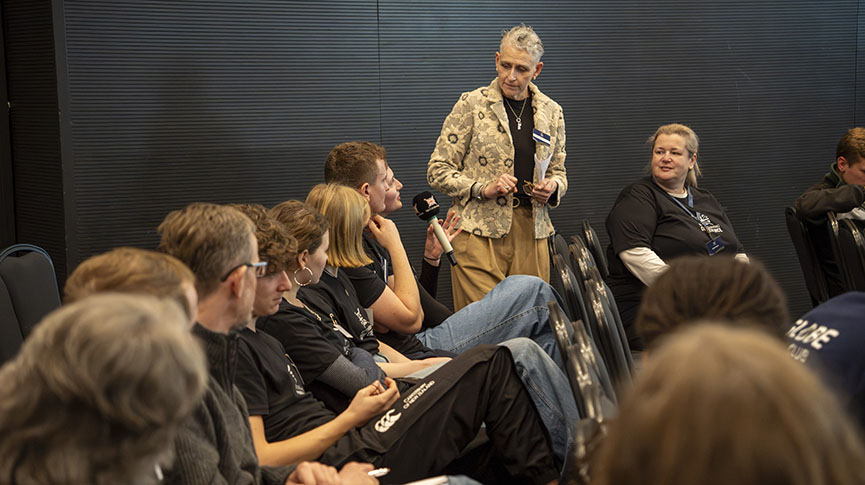
Rebecca also took learnings from the other panels to bring back to her lake. “Our club’s one of those clubs that always says we’re friendly and we’re full of culture. And our culture is really, really lovely. But maybe that’s something we need to look at closer if we want to be sustainable going forwards. I want people to go away realising that you have a lot of ability within your club, and it’s about finding out what knowledge people have and how you can use that. Not every scheme that every other club has is going to suit your club. So it’s finding out what you’ve got and how you can use that.”
Legacy means opening the doors wider
It was clear, with Young Leaders sitting on panels and case studies of young leadership shared throughout the day, that the future of rowing depends on including and trusting younger members. “Leaders don’t always arrive looking like the end goal,” said Dr. Nana Badu BEM, founder of BADU. He encouraged club leaders to be open to the value of learning from young people, as well as considering that cultural backgrounds have an impact on how people are able to engage with the sport for the first time. Understanding this better allows us to ensure everyone feels valued, and is more likely to make rowing the sport for them.
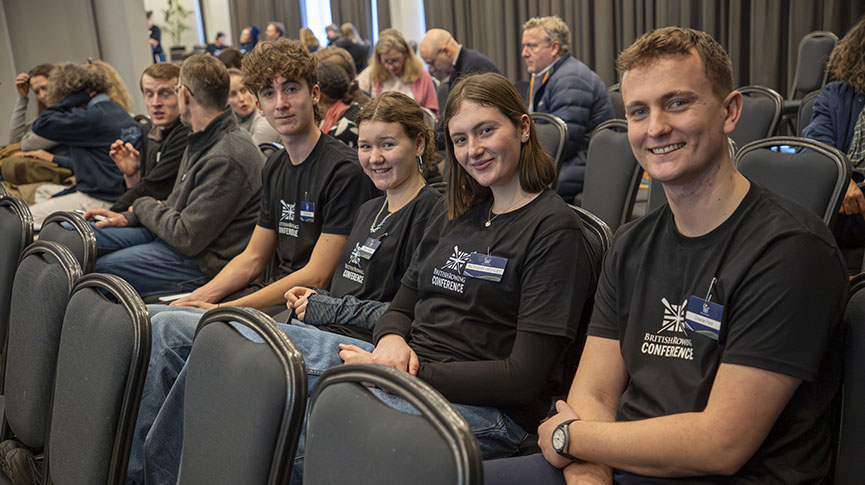
Coaches Club also spoke to unlocking youth expertise, and which leadership roles in clubs could be done by teenagers as young as thirteen.
James Bragg from Coaches Club works towards building the structures that allow people to contribute meaningfully to the running of a club. “I think the biggest key thing for me was the importance of growing your own workforce. Putting that time and effort into those young people and showing that you care. It’s about bringing through that next generation, because they’re the ones that are gonna inherit the club.”
“Putting thought to reimagining opportunities and building the sport with people, not for them, allows you to see everyone who walks through the door as potential,” said Coach Developer Tom Hartley, as he gave his closing reflections on the day. “ It’s about recognising that your future workforce is under your nose already. It’s really important to think about where you were 10 years ago, and where you’d like to get in 10 years from now.”
What’s next?
Club leaders left the Conference with practical lessons to bring back to their clubs, as well as more questions to ask of themselves.
“The answer to all the questions we’ve been asked today is in the room with us,” said Deputy Chair of British Rowing Clare Briegal, also representing Northwich RC. “The knowledge and expertise, it’s here amongst us and we’ve just got to capture it and share it.”
Nathaniel Reilly O’Donnell, Director of Development at British Rowing, said: “It was really good to have everyone together in the same room at the British Rowing Club Leader Conference 2026. We were hoping for strong engagement, and to give club leaders the chance to network and share their experiences, and that was achieved across the day. We’re looking forward to building on this, so this is the start of the conversation, not the end.”