RIP Chris Dodd (1942-2026)
The respected journalist, author and one of the founders of the River and Rowing Museum in Henley, has died aged 84
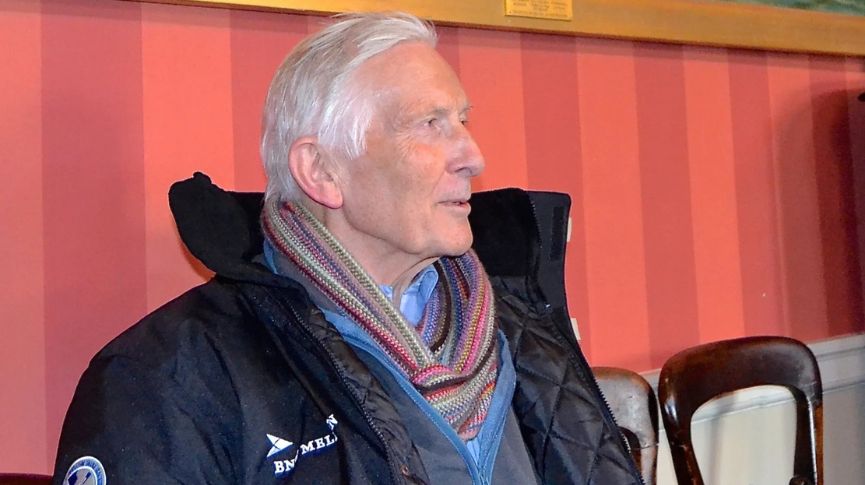
Credit: Hear The Boat Sing
It is with great sadness that British Rowing has learned that renowned journalist Chris Dodd passed away on 25 January 2026.
Chris had a distinguished career as a rowing journalist and historian, having written about rowing in newspapers, magazines and books for over 40 years. He was the recipient of British Rowing’s Medal of Honour for his outstanding service to the sport.
Upon receiving his Medal of Honour, Chris said, “Friends, comrades, rowers: I am somewhat astonished as well as flattered to hear that I am to be awarded British Rowing’s Medal of Honour. Flattered because it boosts my ego; astonished because I have sometimes given British Rowing (once the Amateur Rowing Association) a hard time in print.” Chris was the founding editor of Regatta magazine, leading the publication from 1987 to 2002, whilst British Rowing was still known as the ARA.
Chris was born in Bristol, and it was while attending Clifton College that he first discovered rowing. First as a cox, Chris progressed into his school’s second Eight before attending Nottingham University. After rowing for a short period on the Trent, Chris discovered that his passions were better suited to the newsroom, and he became editor of the student newspaper, The Gongster.
From his student newspaper, Chris started working at The Guardian as a sub-editor in 1965. During his first twenty years working for The Guardian, a national paper, compositors would still lay out pages of news before casting the sections out of molten lead. It was 1970 when Chris started writing about rowing for The Guardian.
In 1994, Chris turned freelance when his idea to set up the River and Rowing Museum in Henley-on-Thames attracted a sponsor. He was responsible for creating the rowing collection and library and curating special exhibitions, and the museum opened its doors in 1998. Having been inspired by a rowing exhibition at the 1984 Los Angeles Olympic Games, Chris teamed up with, David Lunn-Rockliffe then executive secretary of the Amateur Rowing Association, to bring the idea to life.
Following four years of hard work which involved building libraries, exhibitions, archives, and collections from scratch, much of which Chris took charge of, the museum was ready to open in 1998, there have been hundreds of fascinating pieces displayed in the museum and it has featured several historic boats, including The shell that won the Men’s Coxless Four at the Sydney Olympics. However, one of the most unique was certainly the boat used by Oxford University BC in the first Boat Race from 1829. Throughout it’s existence, the River and Rowing Museum won many awards and in 2013, The Times named it in its list of the top 50 museums in the world. More than two million people passed through its doors before it closed last year.
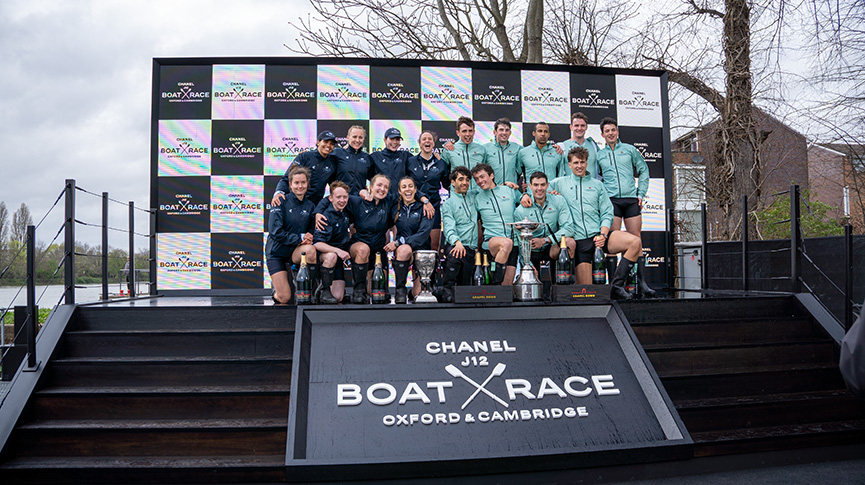
Along with Regatta, Chris was the founding editor of FISA’s World Rowing magazine and sat on FISA’s media commission between 1990 and 2002. He was also one of the founders of RowingVoice, alongside Rachel Quarrell, which came to life at the 2006 World Rowing Championships. Throughout Chris’s career, he covered more than 40 Boat Races, including the 1987 Oxford Mutiny.
Chris published nine books, including histories of Henley Royal Regatta, the Oxford and Cambridge Boat Race, World Rowing and London Rowing Club. Away from writing, he has served as press chief at the World Rowing Championships in 1986 and 1994, and editor of the Olympic News Service at the 1996 Olympic Games in Atlanta. He was also media chief at the 2002 Commonwealth and World Student Games regattas in Nottingham.
Chris died following a long battle with Parkinson’s Disease. His friend and colleague Tim Koch has written a full obituary on Hear The Boat Sing, which you can read here.