Floating pennywort: Support from Sport England, actions to take and how we can support you
Help British Rowing’s efforts to tackle floating pennywort and sign up for our January webinar
Join the webinar
Join the Invasive Plant Species and their Impact on Clubs and Competitions Webinar on 14 January at 18:30.
About Floating pennywort
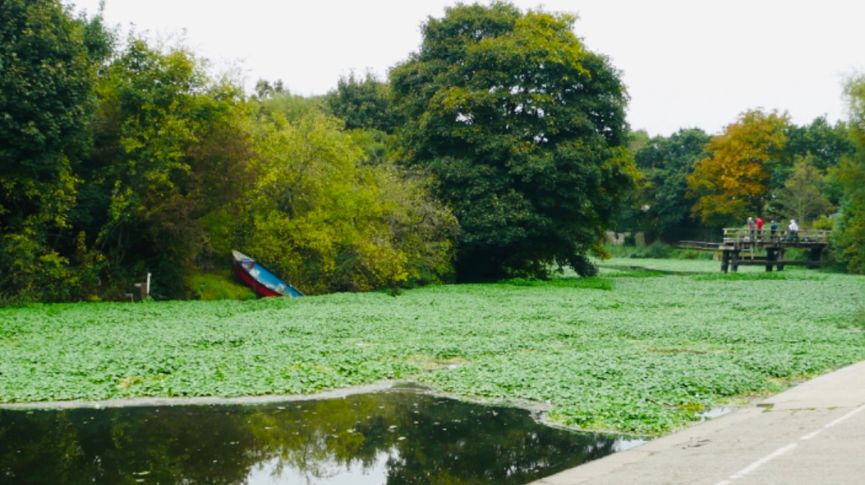
Hundreds of rowing hours have been lost because affiliated rowing clubs cannot access safe water due to the fast growth of pennywort and the serious problems it causes.
Rowing clubs have had to cancel several events due to pennywort growth, resulting in essential income loss.
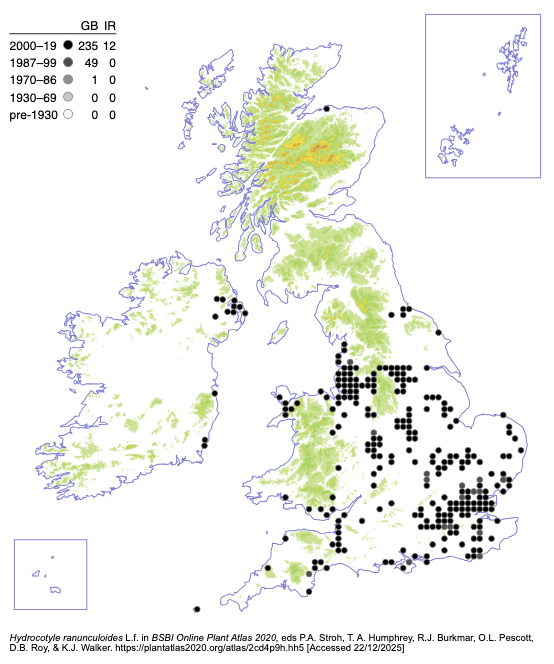
Pennywort was introduced in the 1980s by the aquatic nursery trade. This fleshy-stemmed plant grows into floating mats of lush foliage across waterways. Highly invasive, this non-native plant prevents our rowing clubs functioning and spreads extremely quickly once it has a root in the river, being able to double its biomass in a week. Azolla weed is similar and currently active in the Boston area.
The Sport England Movement Fund
The ‘Movement Fund’ scheme, supported by Sport England, will run for 11 months and help educate and assist clubs to identify, manage and minimise non-native invasive plants, especially floating pennywort. The aim is to reach out to clubs to support them, primarily through education, to control and ideally remove floating pennywort from their stretch of water. This will be a nationwide outreach and education programme, laying groundwork for continued efforts to remove the species beyond the end of the 11-month project including identifying volunteers to continue the guidance work.
Support from British Rowing
British Rowing are welcoming Vanessa Coldwell in the role of Floating Pennywort Manager (one day a week) for the next eleven months. Vanessa started rowing in 1999 at school, continuing to row at University College London BC before moving to Reading RC, where she still rows and coaches today.
Vanessa started working in nature conservation in 2005 with such organisations as the RSPB, The Conservation Volunteers (TCV), Royal Botanic Gardens, Kew and the Wildfowl and Wetlands Trust (WWT), leading projects, researching species, restoring habitats and removing invasive species.
What can you do?
If you are experiencing any problems with invasive weeds, email [email protected].