Lessons from the boat with Greg Searle MBE
Continuing a new series, Fergus Mainland sat down with Greg Searle MBE to learn which lessons from sport and beyond have shaped his career after rowing
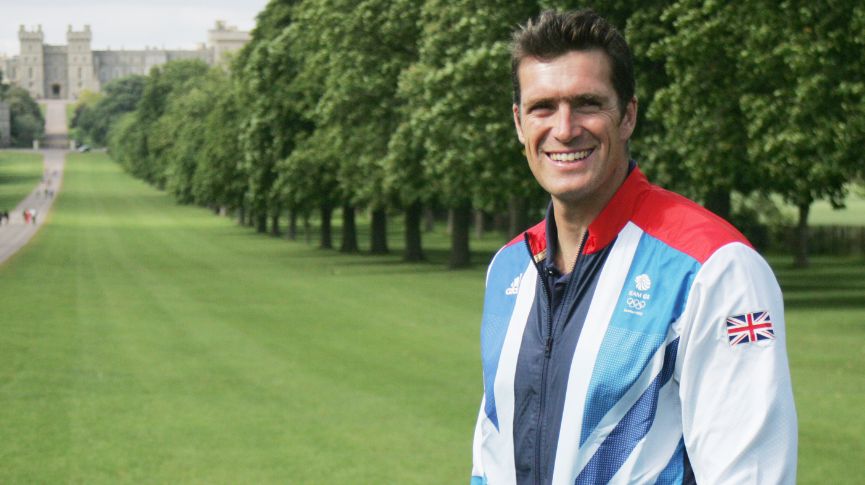
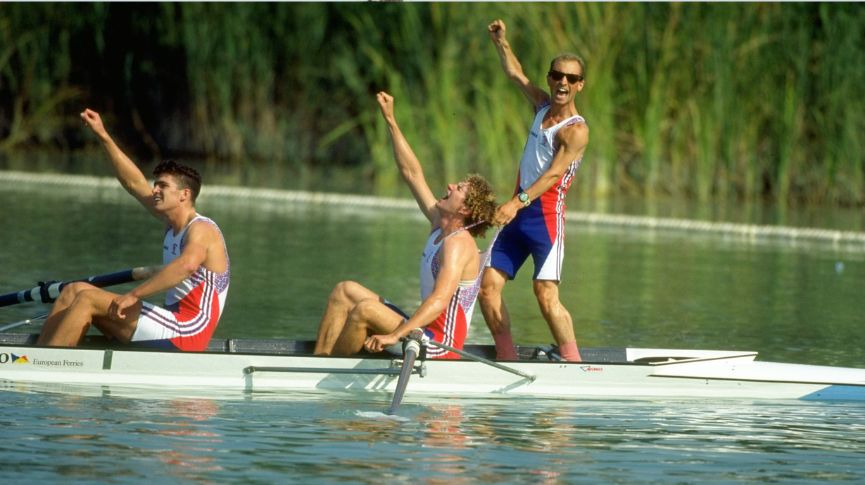
Olympic gold medallist Greg Searle will go down in history as a key part of one of the greatest Olympic finals of all time. Along with his brother, Jonny, and cox Garry Herbert, they famously orchestrated a phenomenal sprint in the second half of their race to win the Coxed Pair at the 1992 Barcelona Olympics.
An Honorary Patron of the charity Access Sport, Greg has spent time as a Grinder on an America’s Cup Boat before returning to rowing and winning bronze in front of a home crowd at London 2012 in the Men’s Eight. The Molesey BC stalwart is also a consultant and inspirational speaker and works with numerous organisations to help them develop a high performance culture.
Drawing from a fascinating career in the boat and beyond, the Henley Steward has identified five lessons that have guided his journey, each offering insights for athletes and professionals alike.
The Martin Cross Factor
“When I was 12 at Hampton School, Martin went to the Olympics and won a gold medal. I remember there was a very memorable assembly when he came back.
“I felt inspired to take up the sport of rowing. Seeing my brother win the Princess Elizabeth Challenge Cup, seeing the way Martin trained, and he would come on the six-mile run with us on a Monday lunchtime. You could see he wasn’t an actual runner, but he was a person who made the most of what he had. I saw an ordinary person do an extraordinary thing as a 12 year old, and I think that had then inspired me to think people like me could do extraordinary things.
“I was then in the Great Britain Eight in 1991, with Martin. I’d gone from watching him win when I was 12, to being in the team around him, and then being in the Eight with him, it was a very cool eight.”
If not now, when? If not you, who?
“At the final trials before the Olympics in Nottingham, Steve Redgrave and Matthew Pinsent lead. We came through, won, and thought we should be the Coxless Pair.
“We then had injuries, and we raced them again. To be fair, we were all in a bit of a low mood. Redgrave had colitis, my brother stress fractured his rib, and ultimately, quite sensibly, they made us the Coxed Pair and them the Coxless Pair. There was a cool moment on our training camp in Silvretta where we didn’t get the three-man room. Redgrave and Pinsent had the three-man room overlooking the lake. We moved Garry’s bed into our room, and we shared a two-man room with three of us for the whole of Silvretta’s three and a half weeks. That was where the switch was tripped to go, ‘We’re a bit special.’ You know, some relationship between me, Jonny, and Garry, and this ‘time of our lives’ thing really came to the fore. And it was like, right, ‘If not now, when? If not you, who?
“With 750m to go in the final, Garry called, ‘If not now, when? If not now, when?’ I think he forgot the ‘if not you who bit’, but it was our mantra, and we did a massive push at 1250m. It was a 30-stroke push, where we did 10 strokes where we pulled harder, 10 strokes where we put the rate up, and 10 strokes where we tried to stride again, which took us through into the last 500, and we’re moving the whole time, and obviously then we won.”
Find your why
“In the third quarter of the Sydney final, the same moment of the ‘If not now. When?’ Ed Coode shouted, ‘Push now,’ and we tried to do a push, and the French apparently called the names of their kids. Jean-Christophe Rolland and Michel Andrieux did this push, that crazy move, and won the gold medal. This calling the kid’s name thing was then a bit of a thing for me.
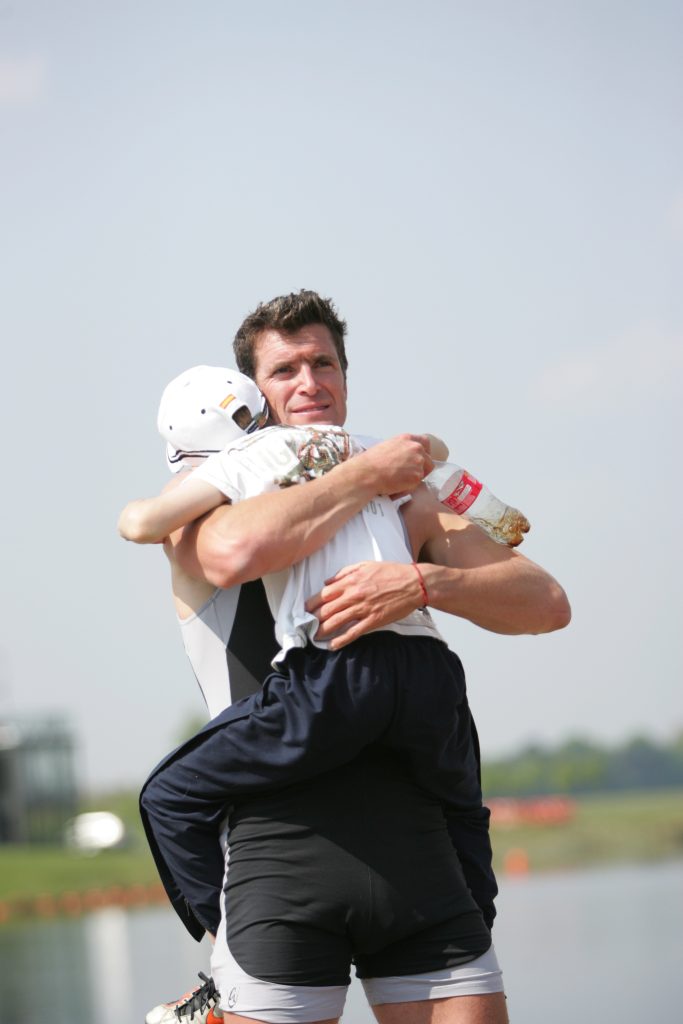
“In 2009, I ended up at the World Championships, the British Men’s Eight came fifth, and I was commentating on them. I went to the airport the next day to fly home, but my flight was delayed and then cancelled. Coincidentally, Jean-Christophe was booked on the same cancelled flight out. We sat together in Poznan Airport and watched the rowing world physically and metaphorically passing us by as they headed to London. We ended up sharing a taxi back to a hotel where we stayed that night, and I had this conversation with him about everything that had happened in that Sydney race and calling the kids’ names. I know my own children would be 9 and 11 by the time of the London Olympics. A fire had been sparked in me, and by the next morning and the flight home, I had decided I wanted to come back and race in the London Olympics.
“I came back to do trials in late 2009 and by 2010 had established myself in the eight. I remember that as a very special crew, and one particular conversation stands out. It was on the eve of the final at the World Championships in Kariprio. We sat around a boardroom table, and our coach, John West, said, ‘Ask yourself this question: ‘Why are you here?’ Each of the crew took turns to share increasingly personal and powerful reasons why they chose to do this difficult, painful, wonderful sport of rowing. Our reasons for rowing peaked when our stroke man shared that in a previous career, their swim coach had told him he was not tough enough to become a World Champion. We knew that wasn’t the case and desperately hoped we could win and that the swim coach would be watching the next day. We won a brilliant silver in New Zealand, and a few years later, our stroke man was crowned a World Champion. This type of sharing of our core drivers and purpose is something I realised really helped if we are to achieve our best in life.
“After three seasons racing in the eight together and as my roommate in London, our cox Phelan Hill was well aware of ‘my why’. As we passed the 1250m mark, he reminded me of the names of my children, Josie and Adam. As he called ‘If not now, when? If not you, who? We forced our bows in front of the German Eight.
Surround yourself with people more talented than yourself
“This will be quite funny to the people in the 2012 Eight, I realised my best chance of winning is if these other seven are better than me. And that’s ok!
“At Lane4, I led a team, and in that team, we had me, who had been a training chartered surveyor, an Olympic rower, and now was quite an experienced kind of facilitator and business coach. I had a woman who worked with me, who trained Generals in the British Army at Shrivenham, who’d also been a high-level swimmer in Canada. I had a guy who was a PhD doctor of sports psychology who worked with England Golf and England cricket. I had a woman who had rowed at Cambridge in college rowing, and then been on the Unilever grad programme, and was an awesome people person. We had a guy who did our numbers, who did finance. A woman who was local and did all the office administration, and a couple of others around us. They were all better than I was at what they did, but I led the team.
“People liked me when I went in to set up the programme and trusted my ability to support and challenge their team. They felt confident we could make a positive change in their business. And I believed that once we were up and running, they would be better off with Jennifer than they were with me. They would learn more from Wil and be more cared for by Shona. When it came to getting organised and getting the right people in the right place, with the right equipment, then Karen was the person they needed. When we needed to actually make a profit, Ollie was the person who pulled the strings. But we had truly complementary skills, and we trusted and respected each other’s abilities in that team.
“It would often be me who might be the first to speak, but only to set one of my team up to deliver their best. That was brilliant to be a leader who could put my ego to one side and let my colleagues shine and let the group thrive. I felt like I learned how to get the very best from others as a leader in that team at Lane4.
When I came back to rowing, I did my best to lead and to push myself every day. Sometimes my crew mates might row longer, or pull harder, and I hoped they wanted to be better than me. And if they were, then that was a good thing. It would give us the best chance of winning when we faced the real competitors in the races ahead. All I could do was try to be a role model and do my bit, and enjoy what we got.”
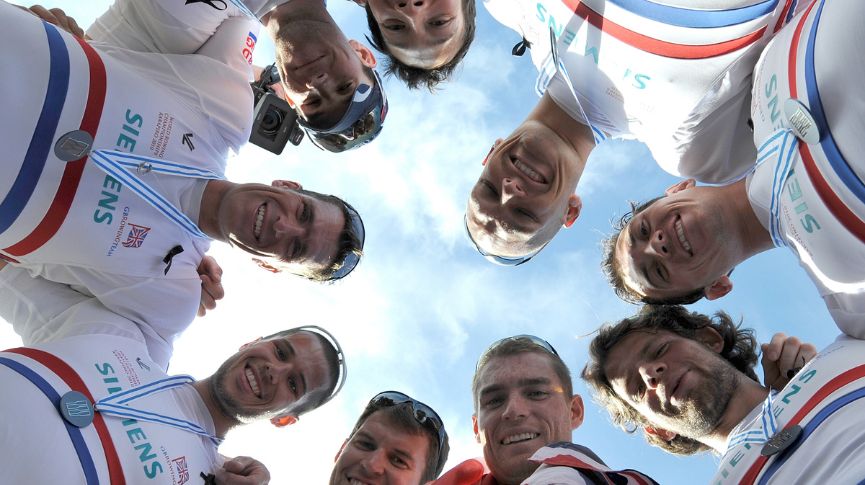
Return the cup without bumps and bruises, but make sure there’s a story to tell
“At Prizegiving, each Henley Steward is allocated a trophy. Cam Nichol is a good buddy of mine. Cam and I paired together, and Cam won the Prince Albert when he was at the University of London BC, and they won it again this year.
“We, as Stewards, try to allocate someone to each trophy for whom it’s meaningful. So Cam got the Prince Albert this year. He was the last one to give that trophy back, because he wants those athletes to have as much fun with the trophy and experience everything that he would have experienced when he won it. I tried to pass that wisdom on to Cam to help them enjoy that moment. In the same way, this year, I was with Molesey BC women who’d won the Wargrave Challenge Cup. Molesey BC’s first women’s win at Henley Royal Regatta.
“It’s just a small bit of the athlete in me, rather than letting ourselves be the sports administrator who goes, ‘Whatever happens, we’ve got to return that cup without any bumps and bruises on it.’ In fact, that’s not it. Obviously, we don’t want to bring the thing back battered and bruised, but they look good because they’ve got some history in them. History that gets created in that hour when they have the trophy after the prize is given.”