Great Britain win six gold medals at World Rowing Cup III
The team won an additional bronze and silver to top the medal table in Lucerne, Switzerland
Credit: Benedict Tufnell
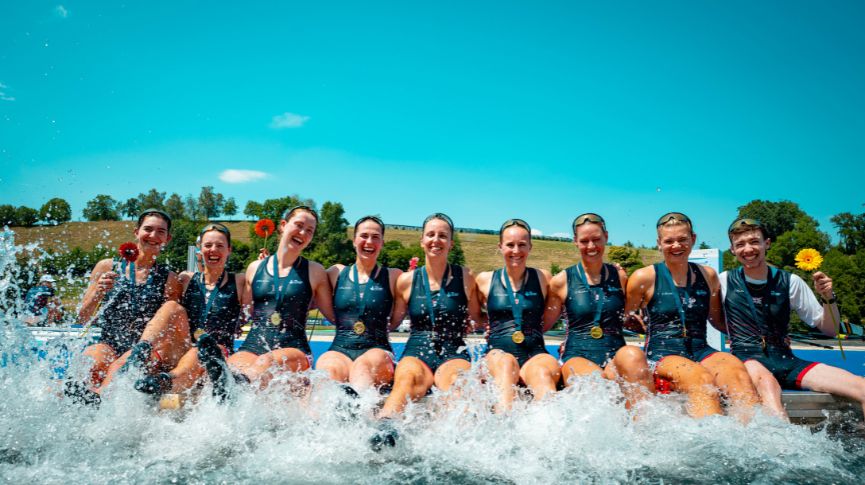
Racing on the Rotsee comes to a close but after racing in two editions of the World Rowing Cup, Great Britain win the overall Men’s Four, Women’s Single Sculls, and Women’s Quadruple Sculls events.
 Credit: Benedict Tufnell
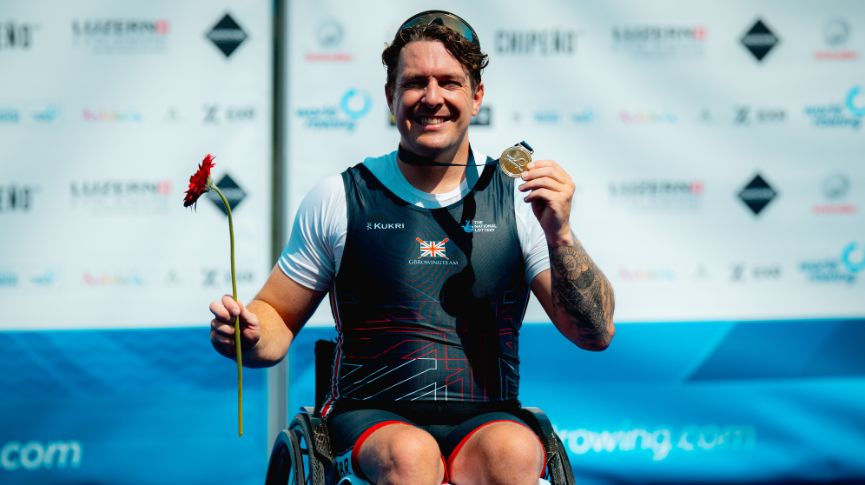
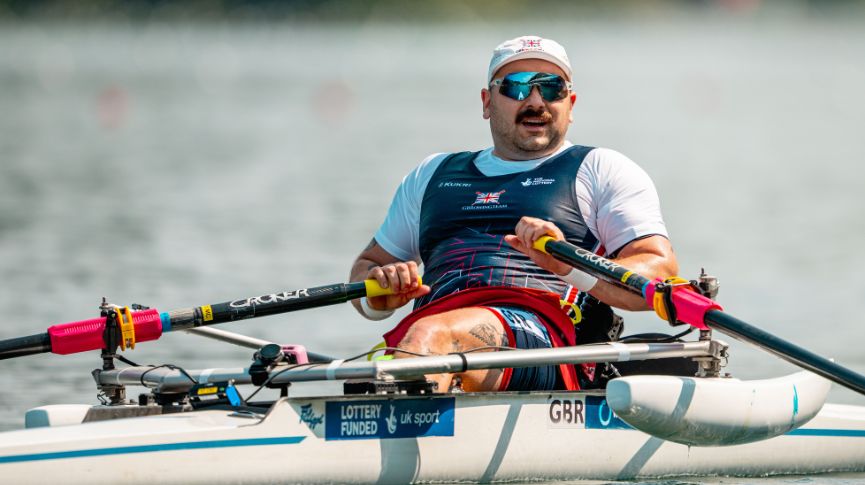
The first of the day’s A Finals saw two British scullers in action. After making history by becoming the first two PR1 athletes to race at the Met Regatta, Benjamin Pritchard and Jake Woods lined up against each other on the Lake of the Gods in today’s A Final. The reigning European, World, and Paralympic Champion did what he did best and let from start to finish to add another gold to his trophy cabinet. He beat Australia’s Erik Horrie by 15 seconds as he crossed the line.
Woods was fourth in the final and in the process beat Israel’s Shmuel Daniel and Spain’s Javier Garcia Martinez, both of whom raced at the 2024 Paralympic Games.
“I was conscious about where Erik was,” explained Pritchard.
“My coach, David, says, ‘Always row to the line.’ So, that’s what I did. We’ve come away with a win, but the big tournament championship is mine and Jake’s. Backgammon game, and I’m currently losing 5-1, so my rowing might be ok, but my Backgammon isn’t!
“Having Jake to train with is fantastic. It makes every session accountable. It’s nice that when we come together, we can really push each other on. In Trials, he’s pushed me more than anyone has. He’s a fantastic sculler, and I can’t wait to see that come through on the international stage.”
 Credit: Benedict Tufnell
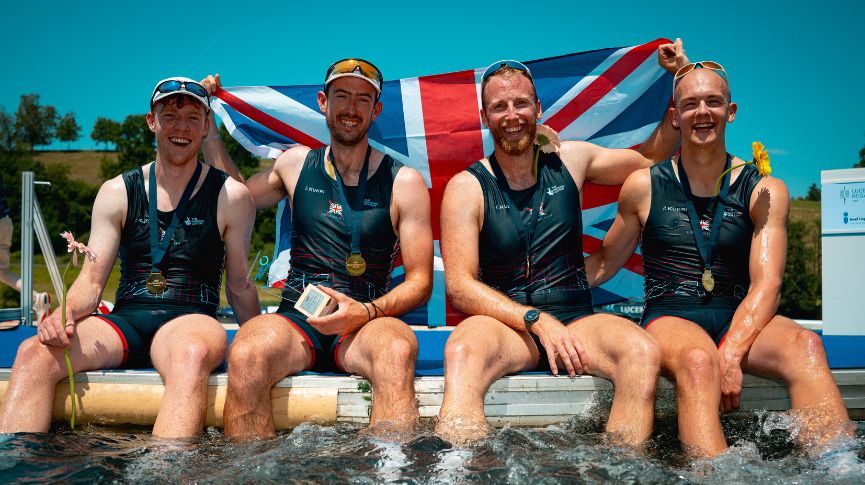
The British Men’s Four extend their unbeaten run after winning gold on the Lake of the Gods. After winning the World Rowing Championships last year, Dan Graham, James Robson, Douwe de Graaf and George Bourne won World Rowing Cup I in Seville and replicated that dominant performance in Lucerne. Behind them, Romania took silver ahead of France in third place.
“It means a lot. Congratulations to France and Romania because that was super tough and they kept coming the whole way,” said Bourne.
To win here is very special; it feels like the Monaco of rowing and a jewel that shines slightly brighter. I’ve got a bit of personal history here from the past couple of years, and that’s exactly the sort of race I’d like on the Rotsee, and to do it with these guys is just awesome!”
 Credit: Benedict Tufnell
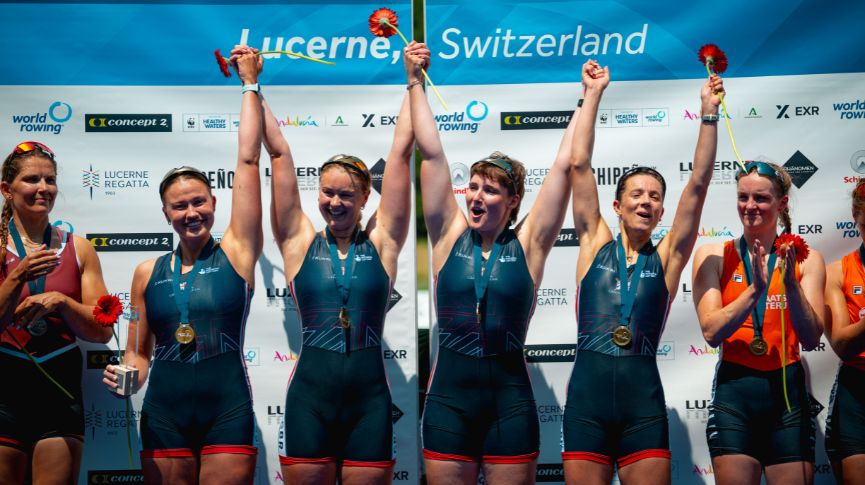
In the Women’s Quadruple Sculls, Great Britain were back on the top spot of the podium. With three Olympic Champions onboard, Lola Anderson, Hannah Scott, and Imogen Grant in the stroke seat, with Reading University BC’s Finn Stratton in the three seat, there were flashes of Paris and Shanghai as the Netherlands mounted a charge in the closing stages, but Britain held on to win gold in a time of 06:30.98.
“We’re experienced as a nation at rowing quads, but we’ve been changing the order around a lot, trying out a lot of different combinations, and this one has come together so quickly it’s just been fun,” said Anderson.
“I’m just so excited to see what we can do, because that was so good and I think there’s so much more to come,” added Grant.
 Credit: Benedict Tufnell
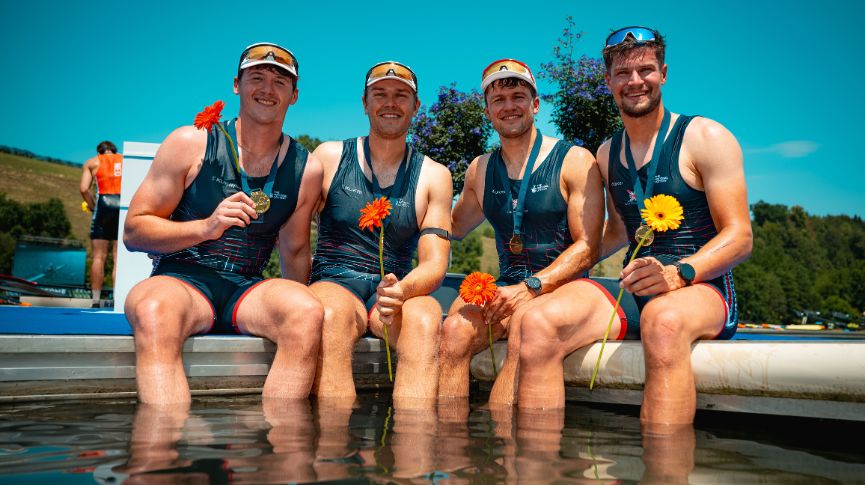
The Men’s Quad kept the gold rush going on the Rotsee. Fortune favours the brave. Cedol Dafydd, Callum Dixon, Tobias Schröder, and Rory Harris were just that as they led out the field in the opening 500. It was close at the finish, but the British had done enough in the early stages to win by a quarter of a length ahead of the Netherlands.
“For sure, it gets sketchy in the last 100, but if you do the work in the first half, it’s a lot easier watching people come at you than to try and go through someone,” said Dixon.
“It means a lot to win here. It’s one of the most beautiful places I’ve ever rowed in my life. There’s so much rowing history that goes on here, so to follow up last year’s win means we’re very happy.”
 Credit: Benedict Tufnell
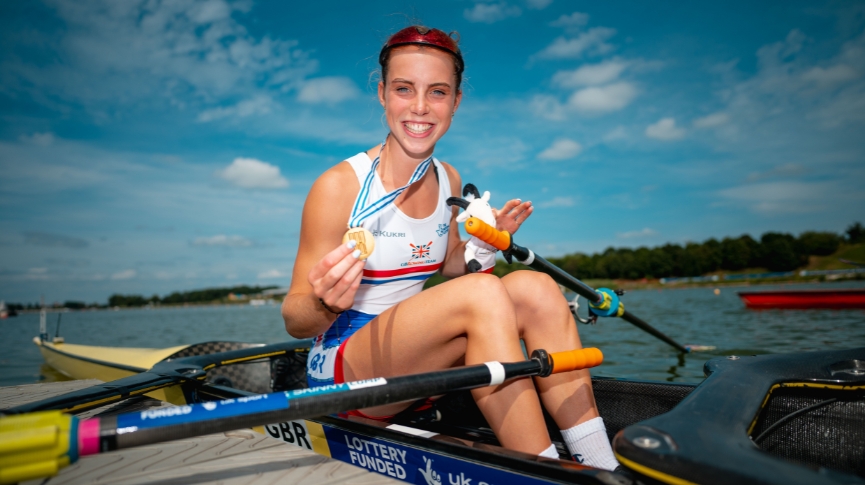
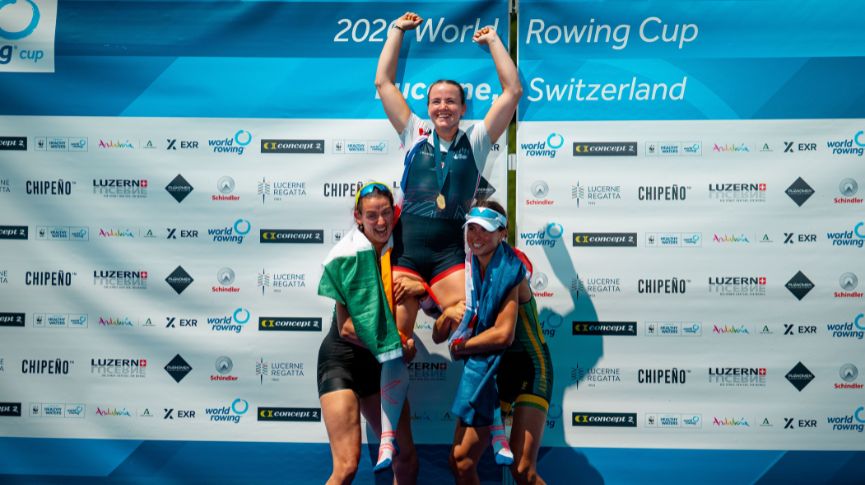
In the Women’s Single Sculls, Lauren Henry made it five golds as the sun beat down on the Rotsee. The all-important third 500 was where the Olympic Champion made her move. Having been led out by Ireland’s Fiona Murtagh, Henry kicked on at halfway and by 1500m into the race, had clear water, a margin she held to the finish as Murtagh took silver ahead of Australia’s fast-finishing Tara Rigney.
“I’m really pleased! I really liked the way I rowed that race, I was very internal,” said Henry.
“I’d like to have a solid training camp in Varese this year. I want to keep enjoying my rowing because that’s when I go fastest. I’m also excited to race Henley Royal Regatta next week because it’s such a great event.”
 Credit: Benedict Tufnell
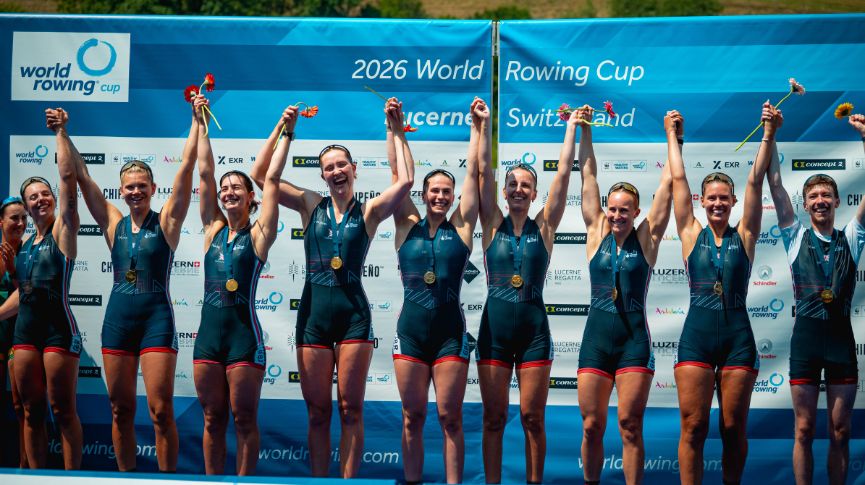
The sixth and final gold came in the Women’s Eight. Lizzie Witt, Jade Lindo, Amelia Standing, Katherine George, Lauren Irwin, Annie Campbell-Orde, Heidi Long, Megan Slabbert, and Jack Tottem blasted out of the blocks and never looked back as they led from start to finish. Come the grandstands and the roars from the bank, Australia were going through the gears, closing down the gap, but it was never going to be enough as Tottem called them home to gold, also beating the World Champions, the Netherlands, who finished out of the medals behind the United States.
“The biggest thing for us was delivering the rhythm. From stroke one, we did that all the way through,” said Lindo.
“Now we go back to training, work hard day in, day out, and trust the process.”
Campbell-Orde added, “I actually had no idea where everyone else was. I felt like it was very internal and we just did what we’ve been practising in training, which is obviously very hard to do in those conditions.”
 Credit: Benedict Tufnell
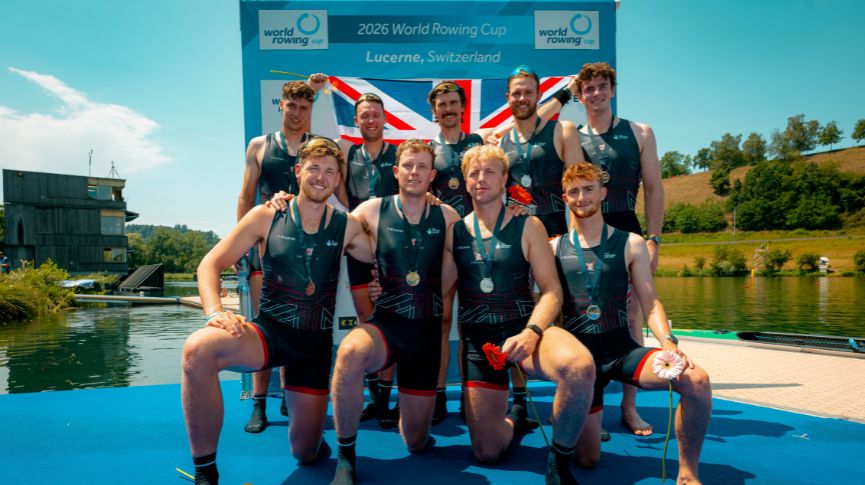
Once again, the Men’s Eight came down to a close finish between Great Britain and the Netherlands. After a quick start from the Dutch, Will Stewart, Matt Rowe, Gabriel Obholzer, Sam Nunn, David Bewicke-Copley, Harry Geffen, Miles Beeson, Archie Drummond, and cox Tom Bryce were hunting down their opponents, and at the finish, they closed the gap to a canvas as the Netherlands took gold.
“Even though we’re sad to lose, we love racing like that,” said Obholzer.
It’s so tight with so many boats across the field. We’ll be back after some training, but hats off to all the crews today, it was some great racing and a lot of fun.”
 Credit: Benedict Tufnell
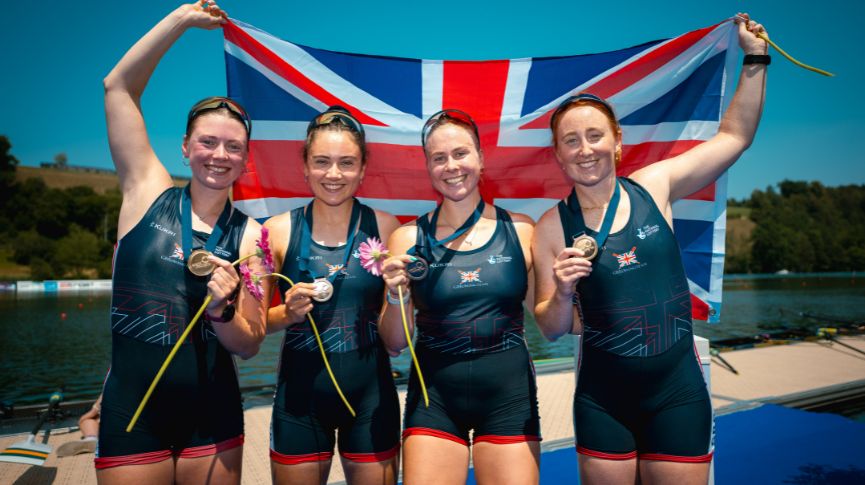
Following the fourth-place finish in Seville, Holly Youd, Sarah Marshall, Angharad Broughton, and Eleanor Brinkhoff went one better to win a fantastic bronze medal in Lucerne. The United States and Australia pulled away from the field, leaving the British in a tussle with the Netherlands for third. A decisive move in the third 500 saw them draw level and then pull away from the Dutch, and they claimed a sensational bronze in the final World Rowing Cup.
“Since we raced in Seville, we’ve had a really good block of training, and we feel we’ve improved so much. We’re a young crew, so we see that improvement every day and in every session,” said Broughton.
“Coming into the race today, it was an exciting opportunity to see where we are now and where we can progress to for next time. It’s my first senior medal and my first World Rowing medal, so I’m really excited. It’s been a cool experience and a fun race to do it in.”
 Credit: Benedict Tufnell
In the A Final of the Men’s Double Sculls, it was fifth place for Josh Knight on his senior debut for Great Britain. In the newly formed combination with Matt Haywood, the two led at halfway, were second with 500 to go, but couldn’t hang onto the coattails of Serbia, the United States of America, and Spain as they finished four seconds back on the winners, Belgium.
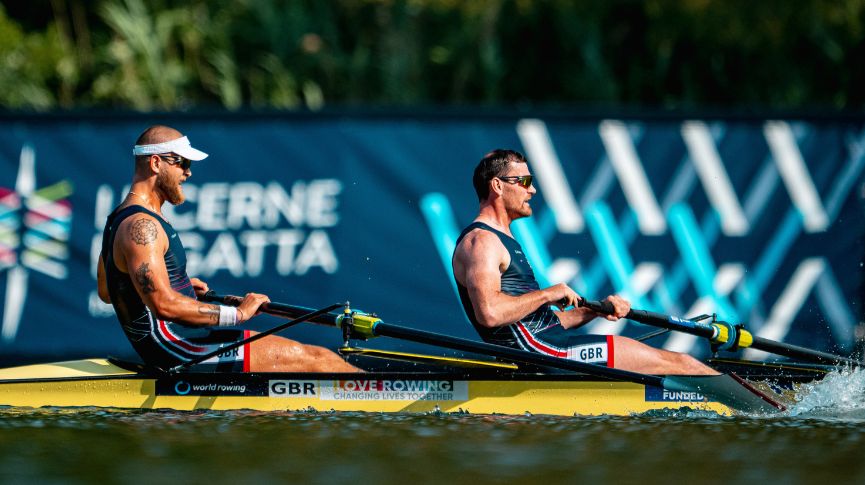
The Men’s Pair of Matt Aldridge and Fergus Woolnough finished World Rowing Cup III ranked eighth overall. The duo were second in their final and were in the thick of the action through halfway, with Germany and Norway both in contention. After a strong third 500, the Norwegians took the lead with 400m to go and extended their advantage to the finish.
“We had no pressure and no expectations,” explained Aldridge.
“Coming into the regatta, we wanted to make the A/B semis and being disappointed with second in the B Final is a very good thing because there’s perhaps a little bit more in there than we initially thought. It’s a very fast Norwegian Pair out there, so it’s good to be racing with them the whole way. Very good for a first campaign.”
 Credit: Benedict Tufnell
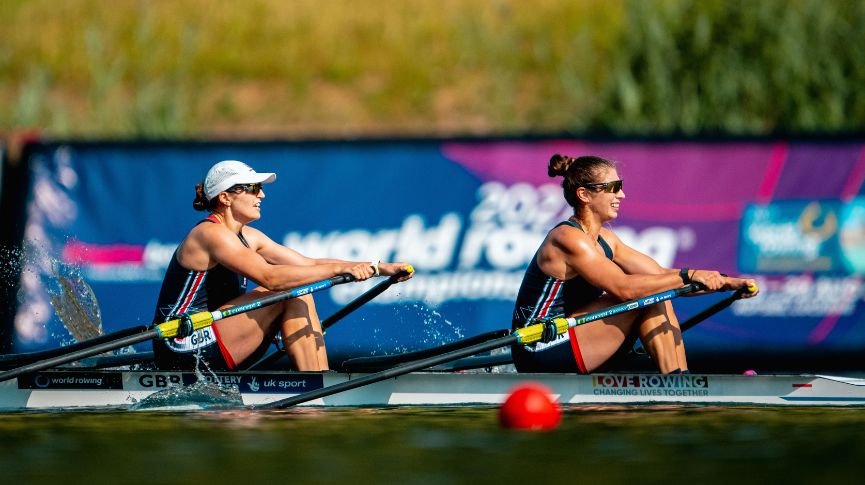
Once again, the Women’s Double fell under the bracket of tight racing. There was less than one second separating Great Britain’s Sarah McKay and Cam Nyland, Switzerland, and Ireland 2 at halfway. Spurred on by the home crowds as they raced in their backyard, Switzerland kicked on, taking the Irish with them, with the British placing third, ninth overall as they crossed the line.
“We wanted to step on again from yesterday, and I think we did that,” said McKay.
“We wanted to be braver through the third 500. We went for it and stepped on which we can be proud of, but yes, we always want more.”
“This was our third 2000m piece, and it shows that it was our third. It felt like we’ve stepped on and each time we get out there we step on, get used to each other, and get used to the way the double moves. It’s a good benchmark for us, and hopefully we can get a good block of training at camp and see where we’re at when it comes to Europeans,” added Nyland.
 Credit: Benedict Tufnell
“The team were exceptional today. It is a special day when British crews hold a presence on the podium across 7 consecutive races,” said Interim Performance Director Tom Dyson.
“It is also special to have a first Paralympic class win in Lucerne, and credit to the 4 team members who won their first World Rowing Cup medals today.
“Coming to Lucerne we were looking for a step on and every crew delivered this. That is a credit to the training and we’ll need to refocus on this as we return to the UK. Elements of the team will hone their racing at Henley and European Rowing Championships in the coming weeks, but the training around this will be the basis of taking another step for the World Rowing Championships in Amsterdam.
“As we finish the World Rowing Cup series, it’s a great opportunity to recognise the whole team. The rowers here in Lucerne have supported each other at every opportunity. In turn they have the support of a fantastic team of coaches and staff. This includes those on the ground here, those at the National Training Centre in Caversham, and those working remotely to give the team every chance to perform – Thank you all!”