Cancer survivors thrilled to compete at Henley Masters Regatta
Female rowers who are using the power of rowing to support their recovery from cancer took part in a special exhibition event promoted by the US-based Survivor Rowing Network
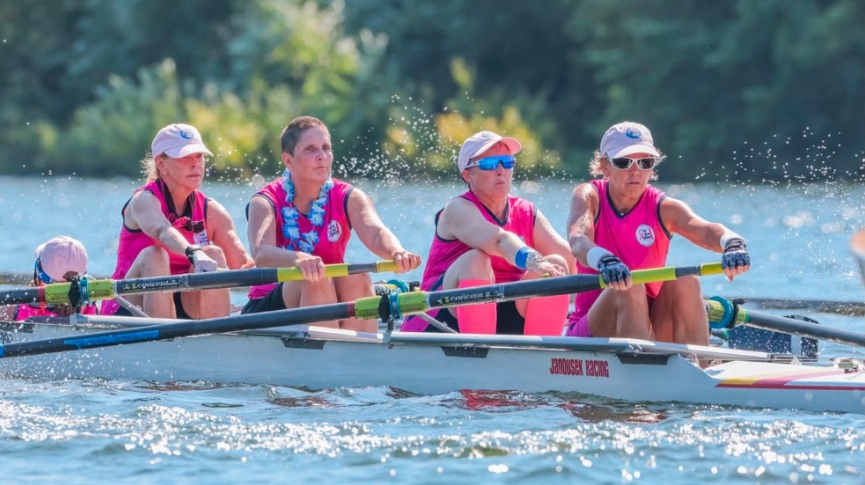
This is the first Cancer Survivor event in the UK and follows the Head of the Charles Regatta as a high-profile rowing competition supporting those who are recovering from cancer.
The idea of including it in the Henley Masters Regatta programme came from Fiona Betts, a London-based rower with breast cancer. After racing at the Head of the Charles last year, she was inspired to explore running a similar event in the UK.
“Rowing gave me something to focus on other than treatment following my diagnosis.”
As Fiona says, “Rowing gave me something to focus on other than treatment following my diagnosis. Exercise can also reduce the risk of recurrence by up to 30%, and being outside on the river and regaining my strength helped me both mentally and physically. As rowing is a low impact sport it can be accessible early in recovery.”
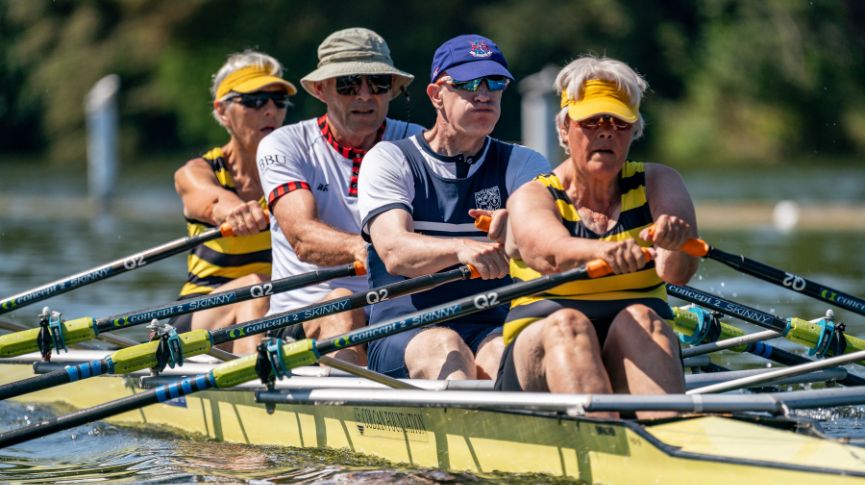
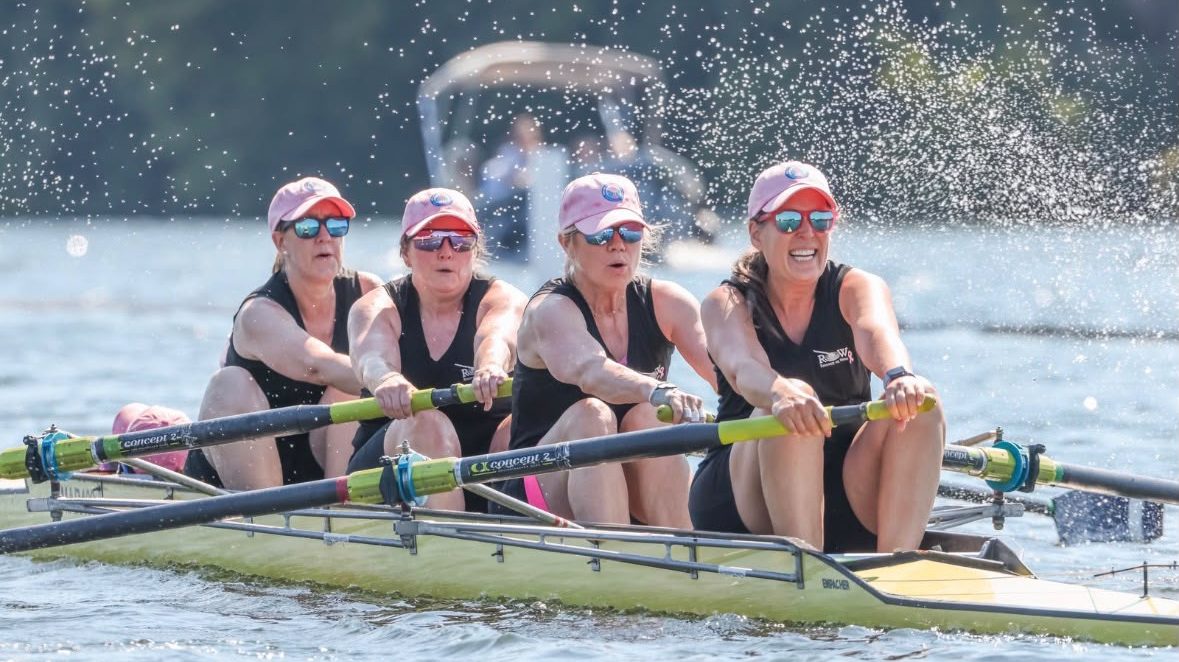
Henley Masters Regatta embraced the concept and Entries Secretary Irene Hewlett facilitated entries in four coxed fours. The chance to race on the famous Henley course generated huge excitement in the rowing cancer community; for rowing cancer recoverers it offered aspiration and the opportunity to be seen as more than a diagnosis. Such as its popularity that the event was massively oversubscribed and four crews were selected by ballot. The lucky participants were Recovery on Water (ROW) from Chicago, WeCanRow – Philly from Philadelphia, WeCanRow DC from Washington DC, and HerOn Thames from London, which included an athlete from the Bahamas as well as three from the UK. HerOn Thames crossed the line first in the final, ahead of Recovery on Water, but if there was ever a case where taking part was more important than winning, this was it.
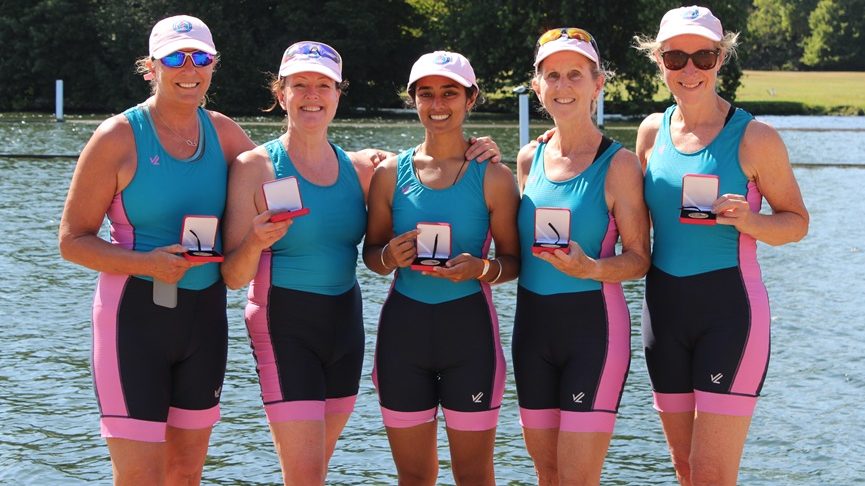 Credit: Fiona Betts
All of the rowers have received a cancer diagnosis and this event was for women only as currently there are more women members of survivor rowing clubs, although the number of men is increasing. The athletes are at various stages of recovery from three to four years post-diagnosis to 15 years or more. The coxes did not need a cancer diagnosis to be eligible.
Exercise can reduce the risk of recurrence of breast cancer by up to 30%.
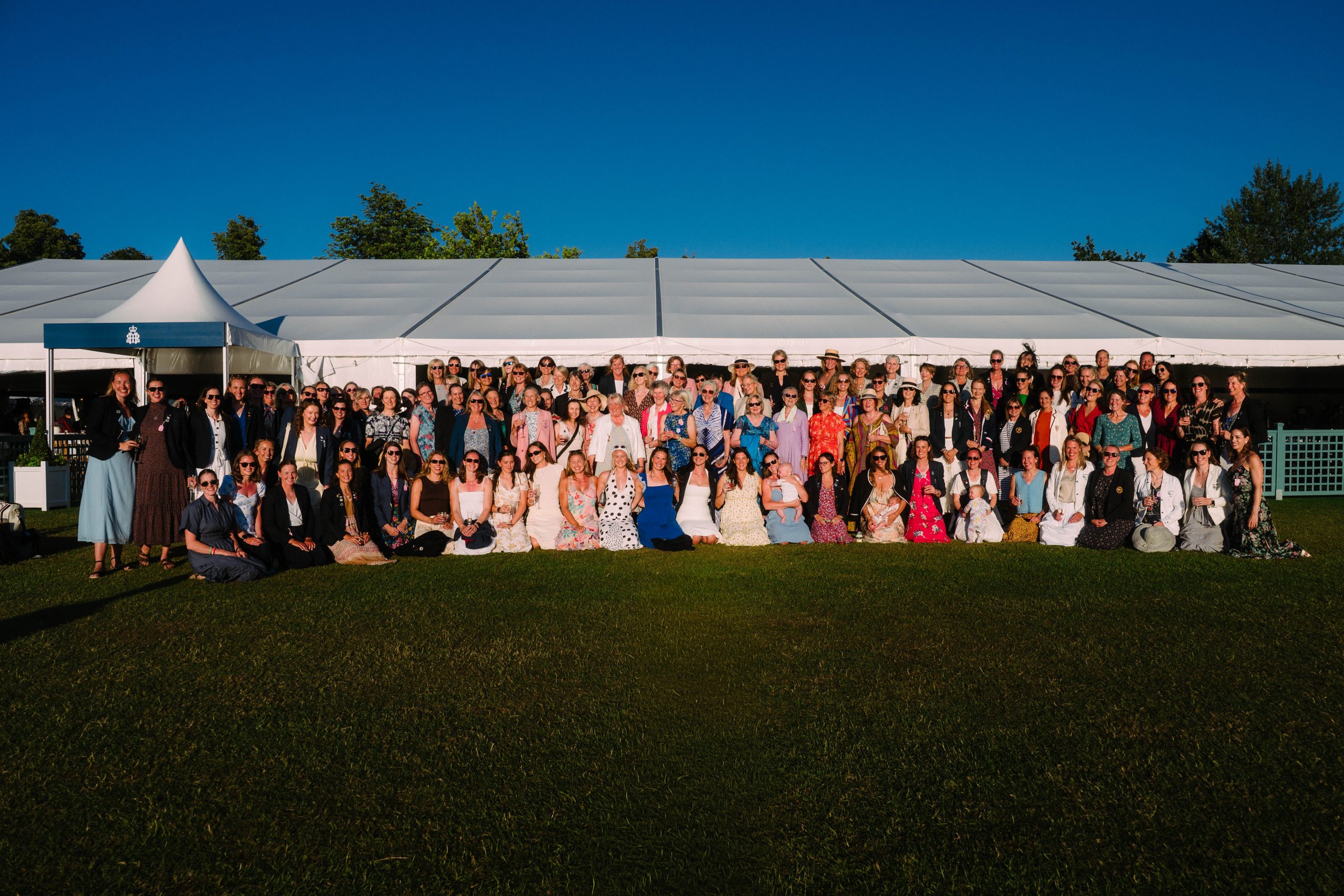
The crews came from cancer recovery rowing programmes linked by the Survivor Rowing Network to share best practice, ideas and promote the value of rowing for cancer recovery.
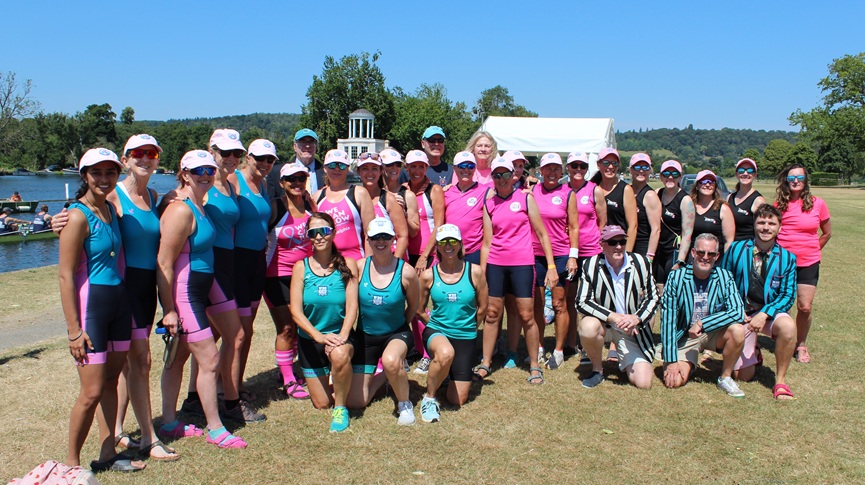
WeCanRow – Philly athlete Bonnie Martin discovered rowing after her diagnosis. She said, “The camaraderie, physicality, and beauty of rowing have boosted my recovery and enhanced my life.”
Tracy Bushkoff, racing for WeCanRow DC, said, “We row, we laugh, we make mistakes, we try, we learn, and we have camaraderie – it is truly a gift! And as everyone shares a similar history, supporting each other is part of the story.”
The crews who raced at Henley Masters Regatta were supported by Tideway Scullers School, Upper Thames Rowing Club and Marlow Rowing Club who lent boats and blades. Tideway Scullers also hosted training in advance.
The Survivor Rowing Network, led by Beth Kohl in the USA, is an international movement helping cancer patients and survivors reclaim confidence, physical and mental health, strength, emotional resilience and connection through the sport of rowing. Many members of the Survivor Rowing network had never rowed before their diagnosis, so the initiative is also broadening participation in rowing. In 2025 over 700 rowers participated in 40 programs in 10 countries and 14 Survivor Rowing Network crews raced at the Head of the Charles.
 Credit: Ben Rodford Photography