Invasive Species Week: Why Floating Pennywort is rowing’s growing problem
This Invasive Species Week, we’re asking clubs across the country to check, clean, and dry their boats to help stop the spread of Floating Pennywort
This week is Invasive Species Week. Invasive Species are one of the biggest causes of biodiversity loss and species extinctions.
The global economic cost of Biological Invasions between 1970-2017 was ≥$1.28 trillion and 1 in 10 species on the IUCN Red List were threatened by Invasive Alien Species per the 2022 Red List.
About Floating Pennywort
Hundreds of rowing hours have been lost because affiliated rowing clubs cannot access safe water due to the fast growth of pennywort and the serious problems it causes.
Rowing clubs have had to cancel several events due to pennywort growth, resulting in essential income loss.
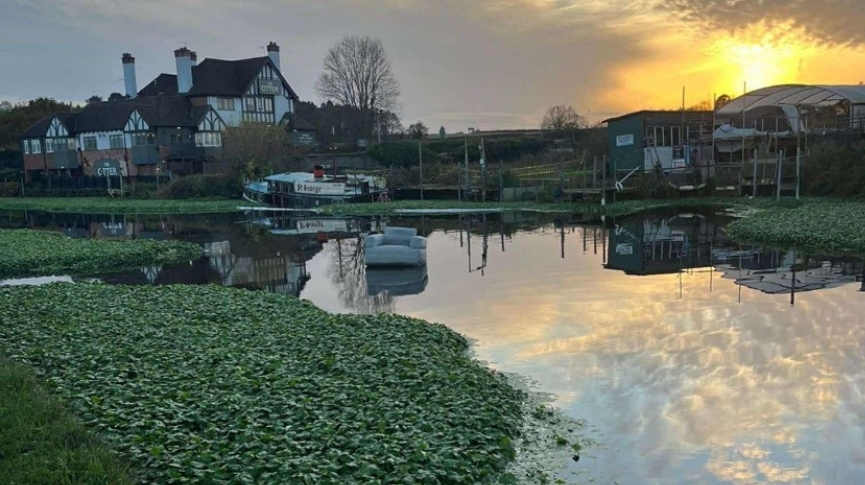
Pennywort was introduced in the 1980s by the aquatic nursery trade. This fleshy-stemmed plant grows into floating mats of lush foliage across waterways. Highly invasive, this non-native plant prevents our rowing clubs functioning and spreads extremely quickly once it has a root in the river, being able to double its biomass in a week. Azolla weed is similar and currently active in the Boston area.
Pennywort is one of these Invasive Species and it can grow up to 20cm per day and double its biomass in four to seven days, forming dense mats which people cannot row through. The stolons embed themselves in the silt before the plant often gets entangled in brambles and other vegetation growing out of the bank and overhanging the water. It primarily grows in still or slow-moving freshwater, e.g. ponds, canals and lowland rivers and cannot tolerate brackish water so generally does not grow in tidal waters.
Rowing clubs have had to cancel several events due to pennywort growth, resulting in essential income loss.
How can you help?
Check, clean and dry your boats regularly after outings and particularly before loading boats to go to events. We recommend this is also done before you boat at your own club again.
If you spot it, please let us know and get it out. The best way to remove Floating Pennywort is to pull it out, ideally as soon as it is first identified.
You can partner with local water sports clubs and organisations to remove it. Clubs are already partnering with the Canal & River Trust, canoe clubs, the Wildlife Trusts, and others in the fight against this plant.
We are here to support you and have resources available to guide you through identification, removal and reporting. More information on “Check, Clean, Dry” is available on our Sustainability page as well as on the GB Non-Native Species Secretariat website.
This week especially, we want to recognise the incredible work that clubs are doing every week to manage this highly invasive plant and keep their waterways safe and accessible for their members to continue rowing.
Let’s work together to protect the future of our sport and the health of the places where we row.
If you are experiencing any problems with invasive weeds, email [email protected].