
Olympic Games
Rowing is one of Britain’s most successful Olympic sports
Visit our 2024 Olympic Regatta hub
In the history of the Olympic Games, up to and including Paris 2024, the GB Rowing Team has won a total of 78 medals
| Medals |
|---|
| 34 medals |
| 27 medals |
| 17 medals |
- Medals:
- 34 medals
- Medals:
- 27 medals
- Medals:
- 17 medals
Rowing is the only GB sport to win a gold at every Games from 1984 to 2016.
British Firsts
- First rowing medal in the sport’s debut at the 1900 Games.
- First women’s medal at Sydney 2000.
- First lightweight gold medal in Beijing 2008.
- First women’s gold medal at London 2012.
Great Britain’s most decorated Olympic rowers
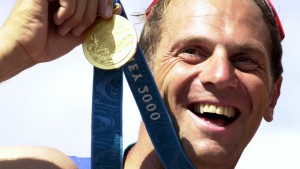 | Sir Steve Redgrave – GB’s most decorated Olympic rower with five gold medals and a bronze medal from five successive Olympic Games. |
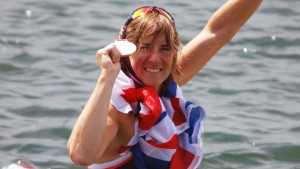 | Katherine Grainger – GB’s most decorated female rower with a gold and four silvers from five successive Games. |
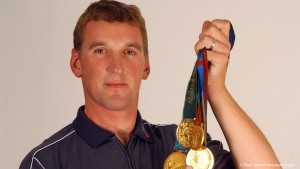 | Sir Matthew Pinsent, Redgrave’s crew-mate at the 1992, 1996, and 2000 Games, won four golds in four successive Games from 1992 to 2004. |
-
- Sir Steve Redgrave – GB’s most decorated Olympic rower with five gold medals and a bronze medal from five successive Olympic Games.
-
- Katherine Grainger – GB’s most decorated female rower with a gold and four silvers from five successive Games.
-
- Sir Matthew Pinsent, Redgrave’s crew-mate at the 1992, 1996, and 2000 Games, won four golds in four successive Games from 1992 to 2004.
GB Rowing Team Medals at Olympic Games
| Olympic regatta | Total | |||
|---|---|---|---|---|
| 2024 (Paris) | W4x LW2x M8+ | W4- M2- | W2x M4- W8+ | 8 |
| 2020 (Tokyo) | M4x | M8+ | 2 | |
| 2016 (Rio) | W2- M4- M8+ | W2x W8+ | 5 | |
| 2012 (London) | W2- W2x M4- LW2x | LM2x LM4- | M1x M2- M8+ | 9 |
| 2008 (Beijing) | M4- LM2x | M8+ W4x | M2x W2x) | 6 |
| 2004 (Athens) | M4- | W4x W2- | W2x | 4 |
| 2000 (Sydney) | M4- M8+ | W4x | 3 | |
| 1996 (Atlanta) | M2- | M4- | 2 | |
| 1992 (Barcelona) | M2- M2+ | 2 | ||
| 1988 (Seoul) | M2- | M2+ | 2 | |
| 1984 (L.A.) | M4+ | 1 | ||
| 1980 (Moscow) | M8+ | M2- M4- | 3 | |
| 1976 (Montreal) | M2x M8+ | 2 | ||
| 1972 (Munich) | 0 | |||
| 1968 (Mexico City) | 0 | |||
| 1964 (Tokyo) | M4- | 1 | ||
| 1960 (Rome) | 0 | |||
| 1956 (Melbourne) | 0 | |||
| 1952 (Helsinki) | 0 | |||
| 1948 (London) | M2- M2x | M8+ | 3 | |
| 1936 (Berlin) | M2x | M4- | 2 | |
| 1932 (L.A.) | M2- M4- | 2 | ||
| 1928 (Amsterdam) | M4- | M2- M8+ | M1x | 4 |
| 1924 (Paris) | M1X M4- | 2 | ||
| 1920 (Antwerp) | M1x M8+ | 2 | ||
| 1912 (Stockholm) | M1x M8+ | M8+ M4+ | 4 | |
| 1908 (London) | M1x M2- M4- M8+ | M1x M2- M4- | M8+ | 8 |
| 1904 (St Louis) | GB Rowing Team did not compete | |||
| 1900 (Paris) | M1x | 1 |
- Olympic regatta:
- 2024 (Paris)
- :
- W4x
LW2x
M8+ - :
- W4-
M2- - :
- W2x
M4-
W8+ - Total:
- 8
- Olympic regatta:
- 2020 (Tokyo)
- :
- --
- :
- M4x
- :
- M8+
- Total:
- 2
- Olympic regatta:
- 2016 (Rio)
- :
- W2-
M4-
M8+
- :
- W2x
W8+
- :
- --
- Total:
- 5
- Olympic regatta:
- 2012 (London)
- :
- W2-
W2x
M4-
LW2x - :
- LM2x
LM4- - :
- M1x
M2-
M8+ - Total:
- 9
- Olympic regatta:
- 2008 (Beijing)
- :
- M4-
LM2x - :
- M8+
W4x - :
- M2x
W2x) - Total:
- 6
- Olympic regatta:
- 2004 (Athens)
- :
- M4-
- :
- W4x
W2- - :
- W2x
- Total:
- 4
- Olympic regatta:
- 2000 (Sydney)
- :
- M4-
M8+ - :
- W4x
- :
- --
- Total:
- 3
- Olympic regatta:
- 1996 (Atlanta)
- :
- M2-
- :
- --
- :
- M4-
- Total:
- 2
- Olympic regatta:
- 1992 (Barcelona)
- :
- M2-
M2+ - :
- --
- :
- --
- Total:
- 2
- Olympic regatta:
- 1988 (Seoul)
- :
- M2-
- :
- --
- :
- M2+
- Total:
- 2
- Olympic regatta:
- 1984 (L.A.)
- :
- M4+
- :
- --
- :
- --
- Total:
- 1
- Olympic regatta:
- 1980 (Moscow)
- :
- --
- :
- M8+
- :
- M2-
M4- - Total:
- 3
- Olympic regatta:
- 1976 (Montreal)
- :
- --
- :
- M2x
M8+ - :
- --
- Total:
- 2
- Olympic regatta:
- 1972 (Munich)
- :
- --
- :
- --
- :
- --
- Total:
- 0
- Olympic regatta:
- 1968 (Mexico City)
- :
- --
- :
- --
- :
- --
- Total:
- 0
- Olympic regatta:
- 1964 (Tokyo)
- :
- --
- :
- M4-
- :
- --
- Total:
- 1
- Olympic regatta:
- 1960 (Rome)
- :
- --
- :
- --
- :
- --
- Total:
- 0
- Olympic regatta:
- 1956 (Melbourne)
- :
- --
- :
- --
- :
- --
- Total:
- 0
- Olympic regatta:
- 1952 (Helsinki)
- :
- --
- :
- --
- :
- --
- Total:
- 0
- Olympic regatta:
- 1948 (London)
- :
- M2-
M2x - :
- M8+
- :
- --
- Total:
- 3
- Olympic regatta:
- 1936 (Berlin)
- :
- M2x
- :
- M4-
- :
- --
- Total:
- 2
- Olympic regatta:
- 1932 (L.A.)
- :
- M2-
M4- - :
- --
- :
- --
- Total:
- 2
- Olympic regatta:
- 1928 (Amsterdam)
- :
- M4-
- :
- M2-
M8+ - :
- M1x
- Total:
- 4
- Olympic regatta:
- 1924 (Paris)
- :
- M1X
M4- - :
- --
- :
- --
- Total:
- 2
- Olympic regatta:
- 1920 (Antwerp)
- :
- --
- :
- M1x
M8+ - :
- --
- Total:
- 2
- Olympic regatta:
- 1912 (Stockholm)
- :
- M1x
M8+ - :
- M8+
M4+ - :
- --
- Total:
- 4
- Olympic regatta:
- 1908 (London)
- :
- M1x
M2-
M4-
M8+ - :
- M1x
M2-
M4- - :
- M8+
- Total:
- 8
- Olympic regatta:
- 1904 (St Louis)
- :
- GB Rowing Team did not compete
- Olympic regatta:
- 1900 (Paris)
- :
- --
- :
- --
- :
- M1x
- Total:
- 1
Note 1: In 1924 GB was awarded a bronze medal in the men’s pair. However, this medal is not recognised by the International Olympic Committee because it was awarded by default – there were only three entries to the event and, having raced the heats, the British crew did not turn up for the final.
Note 2: The medal tally for the 1908 Olympics is disputed. However, the IOC recognises GB as winning four gold, three silver and one bronze in this year.
Find out more
Paris 2024
Tokyo 2020
Watch the three-part behind-the-scenes documentary The Road to Tokyo.
Rio 2016
Find out about Olympic Talent Testing